Why Sketchup 3D Models Are Essential for Efficient and Realistic Design
Sketchup 3d models have become a foundational element in architectural design, interior visualization, and construction planning. Designers across residential, commercial, and landscape sectors depend on structured 3D assets to speed up modeling, enhance presentation quality, and maintain dimensional accuracy. Instead of recreating every furniture piece or architectural detail from scratch, professionals integrate pre-built models directly into their workflow, allowing them to focus on design refinement and spatial optimization.
In today’s competitive design industry, clients expect highly realistic visual previews before approving projects. Using high-quality sketchup 3d models enables designers to present immersive and technically accurate scenes that communicate scale, materiality, and functionality effectively within the first presentation.
The Role of Sketchup 3D Models in Modern Design Workflows
Efficient project delivery relies on structured workflows. Sketchup 3d models support rapid scene assembly, especially in projects requiring repeated components such as doors, windows, furniture, lighting fixtures, and decorative accessories. By utilizing ready-made assets, professionals eliminate repetitive modeling tasks and reduce production time significantly.
These models also ensure consistency across projects. Commercial developments often require standardized furniture layouts or facade components. Having a curated collection of reusable models improves design uniformity while maintaining flexibility for customization.
Additionally, optimized models reduce file size issues, ensuring smooth navigation even in large architectural scenes.
Major Categories of Sketchup 3D Models
Organized asset categorization helps designers maintain efficiency. Several essential categories dominate most architectural and interior projects.
Residential Interior Models
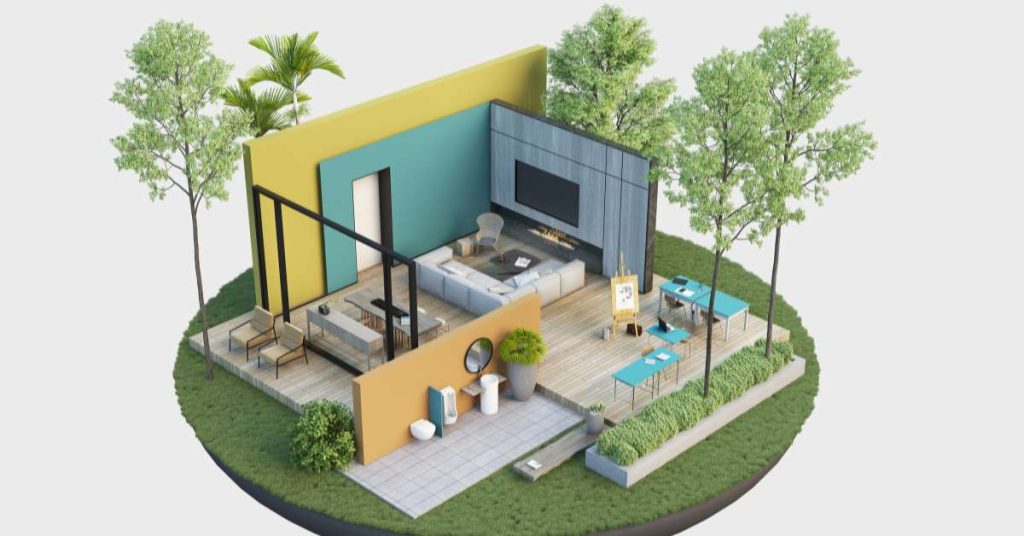
Living room furniture, bedroom sets, kitchen cabinetry, dining tables, and bathroom fixtures form the core of residential visualization. Detailed interior assets allow clients to visualize how space will function in daily life. Realistic proportions enhance decision-making during material and layout selection.
Architectural Structure Components
Staircases, columns, beams, railings, facade panels, and roofing elements are fundamental in architectural planning. Using accurate sketchup 3d models ensures structural consistency and reduces scaling errors.
Commercial and Office Assets
Office desks, ergonomic chairs, conference tables, shelving units, and retail display systems are essential for commercial environments. Ready-made commercial assets accelerate project setup and improve presentation clarity.
Landscape and Exterior Elements
Trees, plants, outdoor furniture, vehicles, streetlights, and paving systems add environmental realism. These elements provide context that strengthens architectural proposals, particularly in urban planning and real estate marketing.
Characteristics of High-Quality Sketchup 3D Models
Not all 3D assets meet professional requirements. Designers must evaluate models based on performance, scalability, and compatibility.
Clean geometry is crucial. Excessive polygon counts or overlapping faces can slow performance and complicate rendering.
Correct scaling ensures real-world proportion accuracy. Proper dimensioning maintains spatial integrity throughout the project.
Organized grouping and component structure improve editability. Designers can isolate parts for modification without disrupting the entire model.
Material compatibility enhances rendering outcomes. Well-mapped textures interact correctly with lighting systems, improving photorealistic visualization.
Benefits of Using Sketchup 3D Models in Professional Projects
Integrating sketchup 3d models into workflow strategies offers multiple advantages.
Time efficiency stands as the most significant benefit. Designers can assemble complex interiors or exteriors quickly without sacrificing quality.
Improved presentation quality strengthens client trust. Detailed environments help stakeholders understand layout functionality and aesthetic direction clearly.
Cost efficiency benefits freelancers and small studios by reducing dependency on expensive modeling labor.
Enhanced collaboration becomes possible when teams share standardized asset libraries across multiple projects.
Where to Access Reliable Sketchup 3D Models
Selecting structured and optimized resources ensures smooth integration into active projects. Professional libraries offering categorized Sketchup 3d models provide assets tailored for architectural and interior visualization needs.
Reliable sources focus on maintaining clean topology, proper scaling, and organized components. Centralized collections eliminate the need to search across multiple platforms, saving time and ensuring quality consistency.
Using trusted repositories also reduces the risk of corrupted files or incompatible formats that may disrupt workflow.
Best Practices for Integrating Sketchup 3D Models
Proper management inside SketchUp ensures optimal performance.
Organize with Tags and Layers
Assign each imported model to specific tags. Structured organization simplifies scene control and improves editing efficiency.
Purge Unused Components
Regular cleanup removes unnecessary data and reduces file size. This practice enhances performance in large architectural projects.
Use Proxies for Heavy Models
In highly detailed scenes, replacing complex assets with lightweight proxies during design stages maintains smooth navigation. Final versions can be restored for rendering.
Verify Material Alignment
Ensure textures are mapped correctly to avoid distortion or scaling issues in rendered outputs.
Common Mistakes to Avoid
Improper usage of sketchup 3d models can lead to workflow inefficiencies.
Overloading scenes with overly detailed assets may slow viewport performance.
Mixing inconsistent styles can reduce visual harmony.
Ignoring geometry errors may cause shading problems during rendering.
Failing to maintain organized asset libraries can create confusion during collaborative projects.
Enhancing Rendering Performance with Optimized Models
Rendering engines rely heavily on structured geometry and properly mapped materials. High-quality sketchup 3d models improve light behavior, shadow accuracy, and reflection consistency.
Clean topology minimizes shading artifacts, while correct material mapping enhances realism. When models are optimized, rendering times decrease and post-production adjustments become minimal.
Professionals aiming for photorealistic outputs benefit significantly from selecting well-prepared assets from curated sources.
Building a Long-Term SketchUp Asset Library
A sustainable workflow depends on organized asset management. Designers should categorize downloaded sketchup 3d models by residential, commercial, and landscape applications.
Maintaining a curated library from reliable platforms such as Sketchup 3d models ensures consistent quality across projects. Organized storage accelerates future project initiation and reduces repetitive searches.
Regularly updating assets keeps the library aligned with evolving design trends and project complexity.
The Future of SketchUp-Based 3D Modeling
As visualization standards continue to rise, demand for high-quality sketchup 3d models will grow accordingly. Real-time rendering, immersive walkthroughs, and advanced lighting simulations require optimized geometry and material-ready assets.
Designers who integrate structured, scalable, and professionally built 3D models into their workflow gain a competitive advantage. Efficient modeling, improved presentation clarity, and faster turnaround times position professionals for success in residential architecture, commercial development, and urban planning sectors.
By leveraging reliable sketchup 3d models and maintaining organized asset systems, designers can streamline production, elevate visualization quality, and consistently deliver compelling architectural presentations that meet modern industry expectations.